CVSA wants FMCSA to tell law enforcement that paper medical cards are acceptable for roadside inspections and safety audits
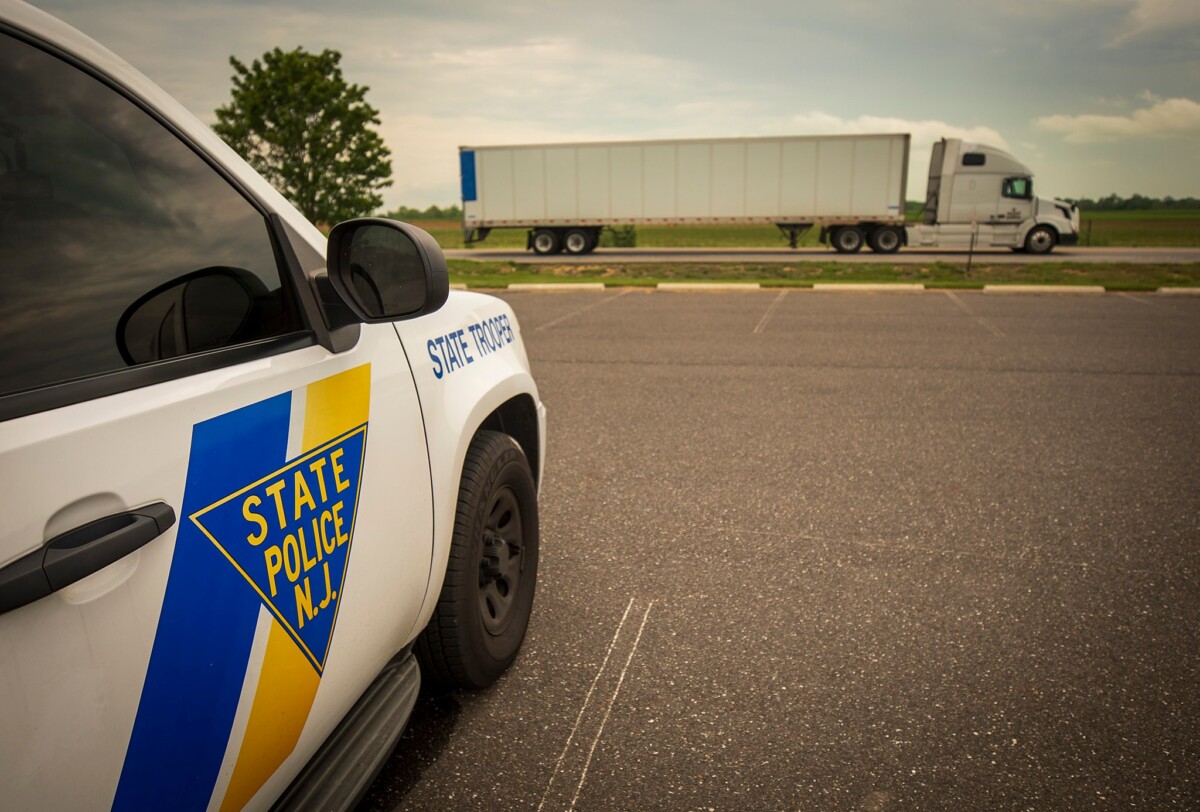
The Commercial Vehicle Safety Alliance (CVSA) asked the Federal Motor Carrier Safety Administration (FMCSA) to provide guidance for law enforcement officers on the use of paper copies of medical certificates for commercial vehicle drivers due to major hiccups in the transition to a new electronic system.
On December 5, 2025, the CVSA sent a letter to FMCSA Administrator Derek Barrs asking the agency to provide guidance to law enforcement that a paper copy of a valid Medical Examiner’s Certificate (MEC) is acceptable proof of compliance during roadside inspections and motor carrier safety audits “until all issues associated with integrating the state driver’s license administrations’ systems with the medical examiners’ systems are resolved and all states have fully complied with the requirements of FMCSA’s 2015 Medical Examiner’s Certification Integration final rule (commonly refer to as NRII).”
The CVSA says that nine states have not yet implemented the NRII requirements, forcing many commercial vehicle drivers to use paper MECs.
The CVSA also pointed to transmission problems even in states that have implemented NRII:
“…earlier this year, FMCSA was made aware of issues some jurisdictions were experiencing with reliable transmission of driver medical certification information, even in states that have fully implemented the NRII requirements, due to incompatibility and errors being made in the data exchange between the medical examiners, FMCSA’s National Registry of Certified Medical Examiners and the State Driver’s Licensing Agencies (SDLA).“
The CVSA noted that the incomplete implementation of the NRII rule is causing major challenges for motor carriers across the county:
“Motor carriers continue to grapple with the effects of this partial implementation of the NRII requirements. Currently, if a motor carrier has a driver whose medical certificate is not transmitting in the system correctly, they are forced to either temporarily cease using that driver until the issue is resolved or resubmit them for an additional medical certification exam, to ensure that they can prove the driver is qualified. And, because there is currently no notification requirement to confirm when a driver’s Medical Examiners Certificate is properly associated with the driver’s motor vehicle record, motor carriers are also forced to query drivers’ Motor Vehicle Record (MVR) more frequently to monitor when the driver’s Medical Examiners Certificate is posted to CDLIS. In addition, in order to ensure their drivers remain compliant, motor carriers are forced to monitor NRII implementation from state to state. This adds additional costs and administrative burden to motor carriers, delays recruitment and onboarding of new drivers, and impacts existing drivers’ ability to complete deliveries, despite being properly qualified.“
On June 23, 2025, the FMCSA’s NRII rule went into effect, requiring medical examiners to electronically submit the results of a commercial driver’s license (CDL) or commercial learner’s permit (CLP) applicant’s physical exam directly to the FMCSA’s National Registry. FMCSA then electronically transmits the exam results to SDLAs, eliminating the need for CDL and CLP holders to submit their own MEC to SDLAs. SDLAs post the exam information received from FMCSA on the Commercial Driver’s License Information System (CDLIS) driver motor vehicle record (MVR).
Because of the states that are not yet in compliance with NRII, the FMCSA announced the extension of a waiver that will allow interstate commercial driver’s license (CDL) holders, commercial learner’s permit (CLP) holders, and motor carriers to use a paper copy of the MEC as proof of the driver’s medical certification for up to 60 days after the date the medical examiner’s certificate was issued. This waiver is valid through January 10, 2026.