USDOT to expand English language proficiency crackdown from truck drivers to railroad crews
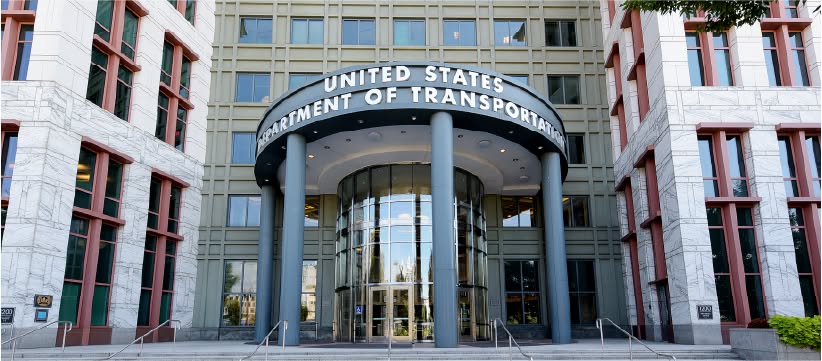
The U.S. Department of Transportation (USDOT) announced plans to increase enforcement of English language standards for railroad crews operating on the southern border.
Feds Threaten Enforcement For Rail Crews With Insufficient Understanding of English
While USDOT has been laser-focused on English Language Proficiency (ELP) rule enforcement for the trucking industry so far this year, it appears that federal transportation officials are now expanding that focus to other transportation industry sectors.
On Friday, December 19, 2025, U.S. Transportation Secretary Sean Duffy said that “the Federal Railroad Administration (FRA) is cracking down on cross-border train operators who lack basic English language proficiency to make rail operations safer in the U.S.”
Duffy said that enforcement action could occur in response to any instances of rail crews operating in the U.S. without a sufficient understanding of the English language to perform their duties safely.
As part of the announced crackdown, FRA sent letters to Canadian Pacific Kansas City Limited and Union Pacific Railroad clarifying that crews from Mexico may not operate more than 10 miles into the U.S. from their point of entry and that uncertified crews must stop at the customs inspection point.
Why Is USDOT Focusing On English Skills For Rail Crews?
Duffy says he ordered the crackdown on rail crews in response to the observed language struggles of crews by FRA inspectors.
“In conducting routine regulatory oversight of cross-border operations this past fall on Canadian Pacific Kansas City Limited (CPKC) and Union Pacific Railroad (UP), FRA inspectors discovered instances in which inbound crew members appeared to have difficulty interpreting General Track Bulletins and communicating safety requirements in English with inspectors,” Duffy said.
Duffy pointed to 49 CFR Parts 240 and 242, regulations that require railroads to only certify locomotive engineers and conductors who possess the knowledge, skills, and abilities necessary to operate safely. He said that since most train documents and radio communications are conducted in English, any language barrier would be a safety issue.
Lack of English Proficiency Is “Unacceptable Safety Risk”: Duffy
“Whether you’re operating an 80,000-pound big rig or a massive freight train, you need to be proficient in our national language – English. If you aren’t, you create an unacceptable safety risk,” said Duffy. “These commonsense steps will ensure every train crew operator can communicate with inspectors and understand basic operational bulletins. This Department will continue to put you and your community’s safety first.”
“Train crew operators who can’t speak English pose a significant safety risk that should not be ignored,” said FRA Administrator David Fink. “Dispatchers and first responders need to know that they can communicate with train crews, especially during times of emergency.”