Aurora says 1,000 mile driverless lane ‘extends well beyond current hours-of-service limitations’ for human truckers
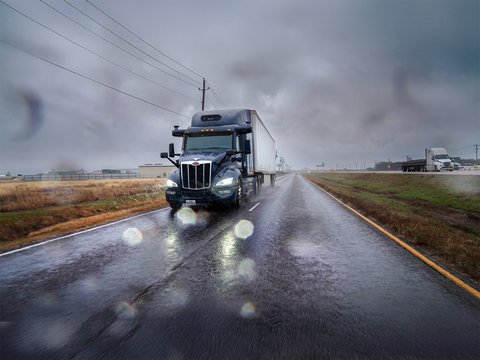
Aurora Innovation, Inc. announced the expansion of its driverless trucking network to new routes, including a 1,000 mile lane that wouldn’t be possible for a human driver who is required to abide by federal rest requirements.
On February 11, Aurora said that it had tripled its driverless operations, with routes hauling freight between Dallas and Houston, Fort Worth and El Paso, El Paso and Phoenix, Fort Worth and Phoenix, Dallas and Laredo, and Fort Worth and Phoenix.
The company said that the 1,000-mile lane between Fort Worth and Phoenix “position[s] Aurora as the first company to autonomously haul freight on a route that extends well beyond Hours of Service (HOS) limitations.”
“Without mandatory rest breaks, the Aurora Driver can cut transit times nearly in half and offer carriers a level of efficiency and superhuman asset utilization that is impossible for traditional single-driver fleets. Hirschbach is an early customer on the route, putting Aurora in pole position to support Hirschbach’s business line that moves goods from coast to coast,” Aurora said.
TechCrunch reports that Aurora’s driverless trucks are currently operating with a human safety driver on board, but that the company plans to begin operating without a human in the cab by Q2 of 2026.
Aurora touts the achievement 250,000 driverless miles as of January 2026, along with “a perfect safety record with zero Aurora Driver-attributed collisions.”
Aurora also detailed plans to expand operations across the Sunbelt this year and said that it would have 200 driverless trucks in operation by the end of 2026.
“Expanding across the Sun Belt and introducing customer endpoints enables us to provide our customers with the capacity they need to move goods at a scale that wasn’t possible before,” said Chris Urmson, co-founder and CEO of Aurora. “Being a carrier is a game of margins and if autonomy can work around the clock, it will be key to growing our customers’ businesses.”
“The era of superhuman logistics has arrived,” said Urmson.
You can hear Urmson discuss the 1,000 mile “superhuman” lane in the video below.