Autonomous truck completes first fully automated load across Texas with zero human assistance
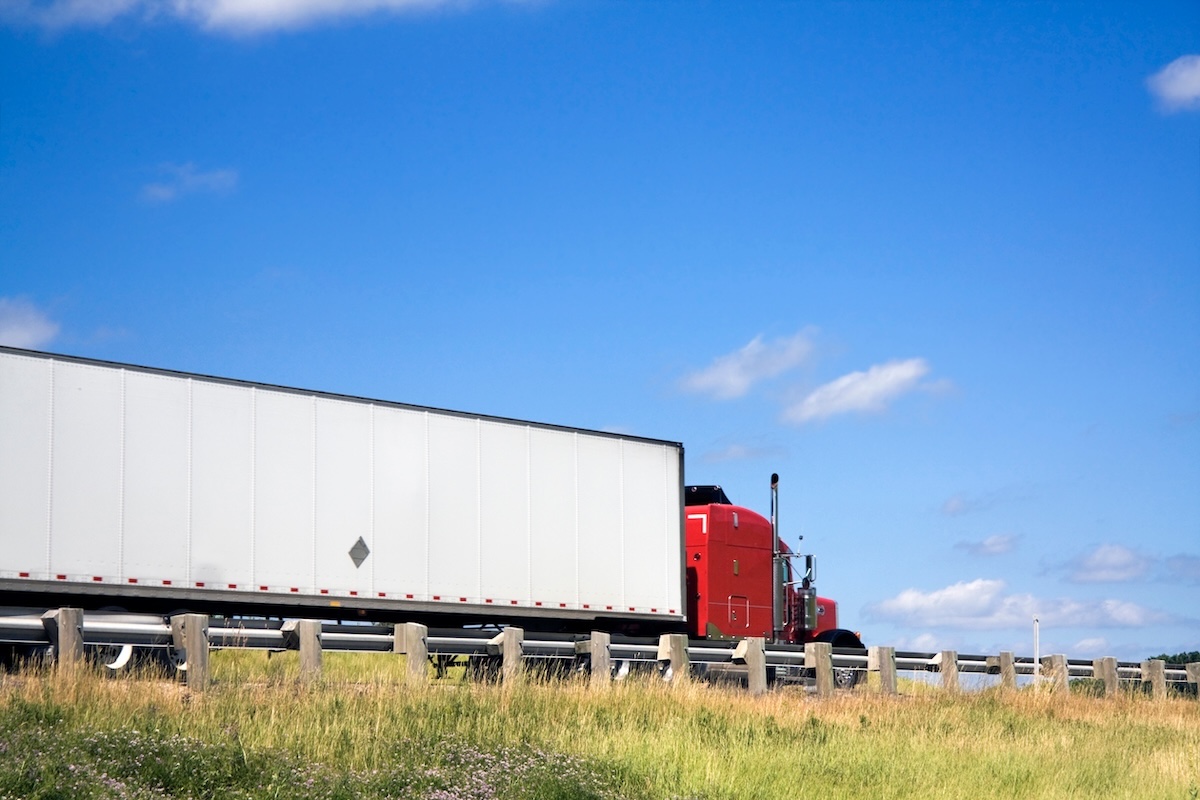
An autonomous truck completed the nation’s first fully automated haul across Texas last week in a 230 mile run from Houston to Dallas.
The run was conducted on Wednesday, April 29th between Houston and Dallas, Texas by autonomous vehicle company Bot Auto.
According to Fox News, the autonomous truck started at Riggy’s Truck Parking in northeast Houston, and delivered to Hutchins, Texas just south of Dallas.
“Our autonomous truck departed Riggy’s Truck Parking in northeast Houston, headed to Hutchins, Texas, just south of Dallas. Departure was late at night as the shipper requested overnight service for this route. The truck ran 230 miles northbound on I-45, one of the busiest freight corridors in the country, navigated stop lights, side streets and frontage roads. There was no safety driver or observer, nor a remote operator. It was booked through our customer Ryan Transportation, true to our operating model, which is compatible with how freight actually moves in America today,” said CEO and founder of Bot Auto, Xiaodi Hou.
Hou says that the load was run just like any other load with a trucker at the wheel, only this truck had no driver, no special test system, and no remote operator watching over it. This fact makes it stand out from other automated truck companies that have a human monitoring the truck from some office somewhere.
“Real freight, real customer, real timeline, delivered safe and on time. We are not disclosing the shipper or commodity, but this was not a load we manufactured to check a box. It moved through Ryan Transportation, a top-20 freight brokerage. Booked, priced, and executed the same way as any truckload moves in America. We made money on it. This is a commercial business, not a research project.”
“For Bot Auto, fully humanless means no safety driver, no back-seat monitor, and no low-latency remote human fallback. More specifically, our safety design does not require any human to notice, decide, or react within one minute to keep the truck safe. We may have operational visibility, just like an airport tower can monitor the plane, but it does not fly the plane. That is our standard: humans can support the mission, but the truck must own the driving safety case.”
“The truck would not wait for a human to save it,” he continued. “If it reached a condition outside its approved operating boundary, it would enter a mitigated risk condition: slow down, create space, and bring itself to a controlled safe state. The principle is simple: when the truck encounters extreme or unexpected situations, it does not gamble. It acts conservatively. Sometimes that means stopping; sometimes it means continuing briefly to reach a safer place to stop. Human support can help after the vehicle is already safe, but the vehicle has to own the first minute.”
Hou says that this particular load cost less than $2 per mile, but warns that any cost savings have to be considered at scale.
“I want to be precise here, because the industry has a habit of cherry-picking the easy savings and hiding the real costs… autonomous trucking’s cost impact isn’t a simple trade-off between driver wages and vehicle cost, it runs deep into operations… It improves at scale. The fixed costs of building and validating the system are largely sunk. As we add trucks and lanes, the per-mile cost of the technology keeps declining.”