CVSA provides inspectors with guidance on false RODS and ELD tampering ahead of Roadcheck
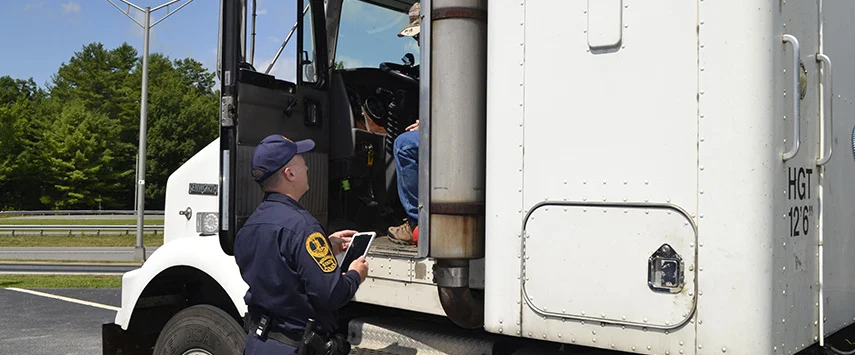
The Commercial Vehicle Safety Alliance (CVSA) recently published an inspection bulletin providing guidance for law enforcement on false record of duty status (RODS) and electronic logging device (ELD) tampering.
In a bulletin published on March 2,2026, CVSA shared guidance on false RODS and ELD tampering to help inspectors determine when to place commercial vehicle drivers out-of-service (OOS) per the CVSA North American Standard Out-of-Service Criteria.
The inspection bulletin is effective April 1, 2026, ahead of the May 12 — May 14 CVSA International Roadcheck effort, which will focus on ELD tampering and load securement.
OOS Orders Are Only For Drivers Who Are An “Imminent Hazard”
The CVSA bulletin provides several examples of false RODS and ELD tampering and then instructs inspectors to cite drivers but not to place them out-of-service (OOS) for these violations if the inspector can determine that the driver is not over hours at the time of the inspection.
From CVSA:
“Inspectors should rely on the driver interview and make every effort to support the OOS violation through motor carrier contacts and the collection of supporting documentation. The goal is to only place drivers OOS who pose an imminent hazard. For standard false RODS, where it is possible for the inspector to determine when the falsification occurred, and the driver is not over hours at the time of inspection, these false RODS should be cited under § 395.8(e)(1), and the driver should be allowed to proceed. If the driver is over the HOS limits at the time of inspection, the driver should be cited under § 395.8(e)(1) and placed OOS until such time as eligibility to drive is re-established.
For drivers whose RODS have been reengineered, reprogrammed or tampered with and the ELD does not accurately record or retain required data, and it is not possible for the inspector to determine when driving occurred, the inspector should cite a § 395.8(e)(2) violation and place the driver OOS for 10 consecutive hours.“
How Can Inspectors Spot False RODS?
The CVSA provided instruction on how to determine whether RODS have been altered or falsified.
“False RODS, where the driver misuses personal conveyance or does not log into the ELD causing unidentified driving time, are normally easy to determine if the driver is over hours at the time of inspection. With these types of false RODS, the inspector can usually determine how much rest the driver received and if they need to be placed OOS,” the CVSA said.
“Inspectors are finding RODS that have been altered or shifted up to several days. There is no indication in the event details that there was any change to the RODS. The only way inspectors find these altered RODS is by comparing supporting documents to the RODS. In these cases, it is not possible to determine the time, duration and location of the rest break,” the inspection bulletin stated.
BOLO For Fictitious Driver ELD Accounts
The CVSA also warned instructors be on the lookout for the practice of motor carriers creating “fictitious” driver ELD accounts in order to falsify RODS.
“The Oxford Dictionary defines tampering as “interfering in order to cause damage or make unauthorized alterations.” The fraudulent use of driver credentials is an unauthorized alteration of the ELD. An example of this is a motor carrier creating a fictitious driver ELD account to reassign driving time or allow drivers to log in to the device using fraudulent credentials,” the agency said.
The CVSA cited an example in which a motor carrier “set up a fictitious ELD account using the same driver’s name but changed the username, used lowercase instead of uppercase for the driver’s name, and changed one digit in the commercial driver’s license. The driver would alternate logging into each account to continue driving after hours-of-service limits were met. It is the inspector’s responsibility to prove/verify that a fictitious account was used and document verification efforts in the inspection notes.”