Don’t run on fumes: 6 tips for staying rested while on the road | Resmed
Content Sponsored By Resmed
Life on the road leaves no room for mistakes. One moment of fatigue, one delayed reaction, one second with your eyes drifting shut can have serious implications.
If you’re pushing through long shifts feeling exhausted, unfocused or irritable, that may not just be part of the job. It could be a warning sign. Start 2026 by protecting your health and the people counting on you with these six practical sleep tips designed for life on the road.
Kick off 2026 with these 6 tips for better sleep
A new year brings a fresh start and a chance to reset. These tips can help you create healthier bedtime rituals to help improve your focus and stay alert behind the wheel.
Tip #1: Create a personal wind-down routine
Your routine sets the tone for a restful sleep ahead. Spend 20–30 minutes doing something that helps your mind and body decompress from your shift. This might include a warm shower, gentle stretching or reading something calming. Consistency is key, no matter where you lay your head.
Tip #2: Reserve your bed for sleep only
Think of where you sleep as a place that signals rest. When you use it just for sleep or quiet relaxation, your brain learns, “This is where we power down.”
Bringing work, social media scrolling or late-night TV into bed can keep your mind alert. Keeping these activities outside your sleep space can help your body make the connection that bed = sleep.1
Tip #3: Power down to power off
Screens are part of everyday life, even when you live your life on the road. Blue light from phones, tablets and TVs can make it harder for you to wind down.2 Try turning off electronics at least 30 minutes before you plan to fall asleep.
Tip #4: Move during the day – however, and wherever, you can
You don’t need a gym. A short walk, light movement at a rest stop, or stretching before or after your shift helps your body regulate sleep later. Movement supports circulation, stress relief and better nighttime recovery, especially with long hours behind the wheel.
Tip #5: Use the “10-3-2-1-0” rule
Looking to build new habits? Give this a try:
- 10 hours before bed: skip caffeine
- 3 hours before bed: avoid heavy meals or alcohol
- 2 hours before bed: wrap up work
- 1 hour before bed: turn off screens
- 0: the number of times you hit snooze
Adapt a version to your schedule that works for you. The goal is fewer disruptions and more consistent rest.
Tip #6: Take a 3–5-minute sleep assessment
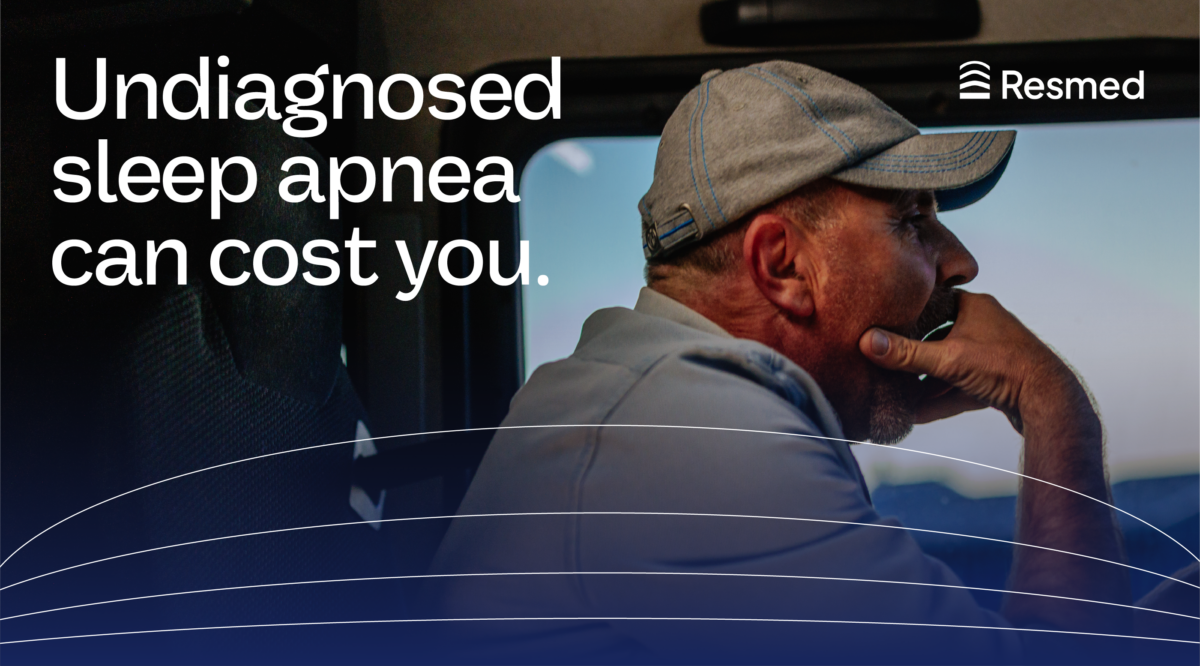
Sleep apnea is a disorder that can cause your breathing to stop and restart many times throughout the night. Those repeated interruptions can leave you fatigued, unfocused, and irritable — making tasks like driving more challenging and potentially unsafe. If any of those signs sound familiar, don’t wait. See if sleep apnea could be affecting your sleep today.

1 Mayo Clinic Center for Sleep Medicine. Stimulus Control for Better Sleep (2010).
2 Chang et al. Proc. Natl. Acad. Sci. U.S.A. (2015).
3 Gottlieb, D. et al., (2018). BMC Medicine.
This is sponsored content.