Heavy Hook and the Heart Behind It: Clifton’s Working Show Truck and the Patriotism That Drives It
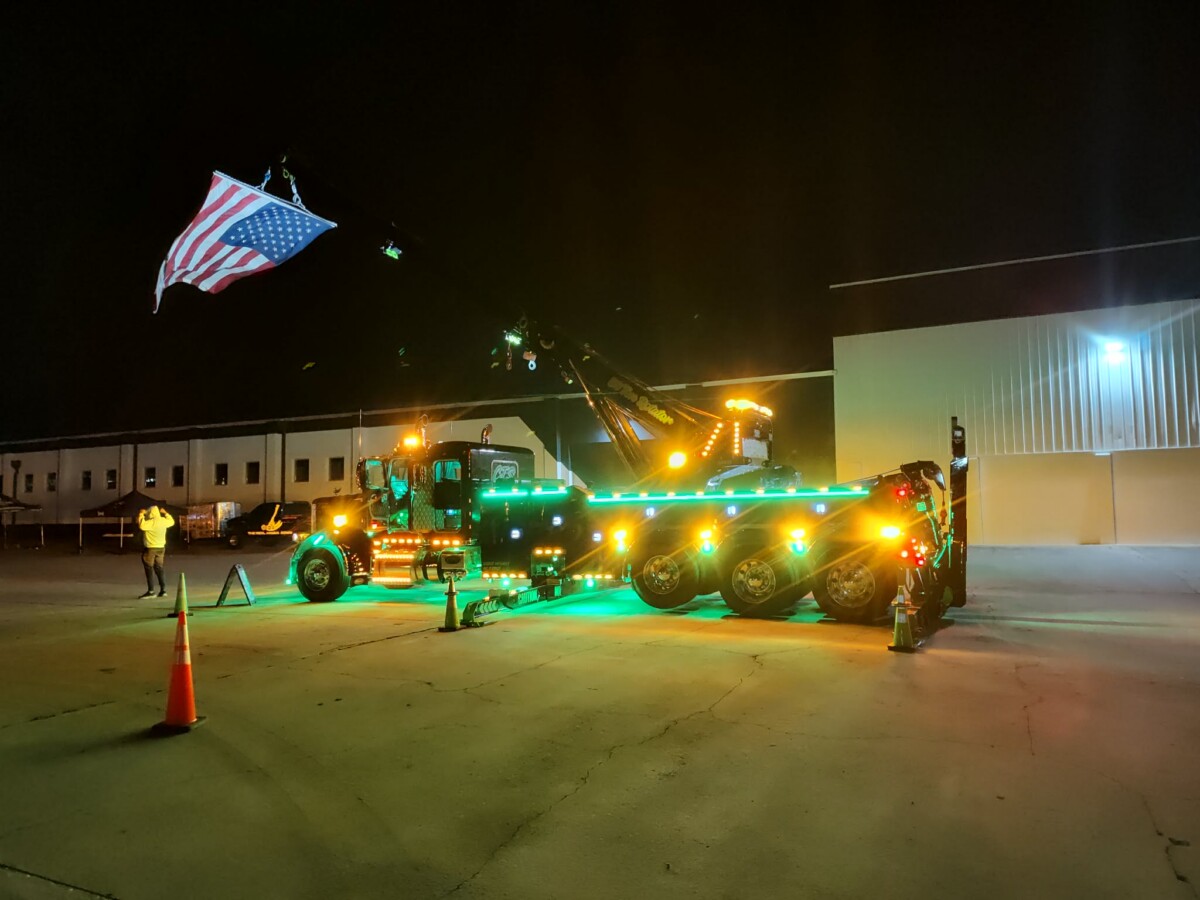
CDLLife Contributor Polly Trotter interviewed Clifton Parsley for the Stars, Stripes, and White Lines Truck Show at EchoPark Speedway in Hampton, Georgia, in November 2025.
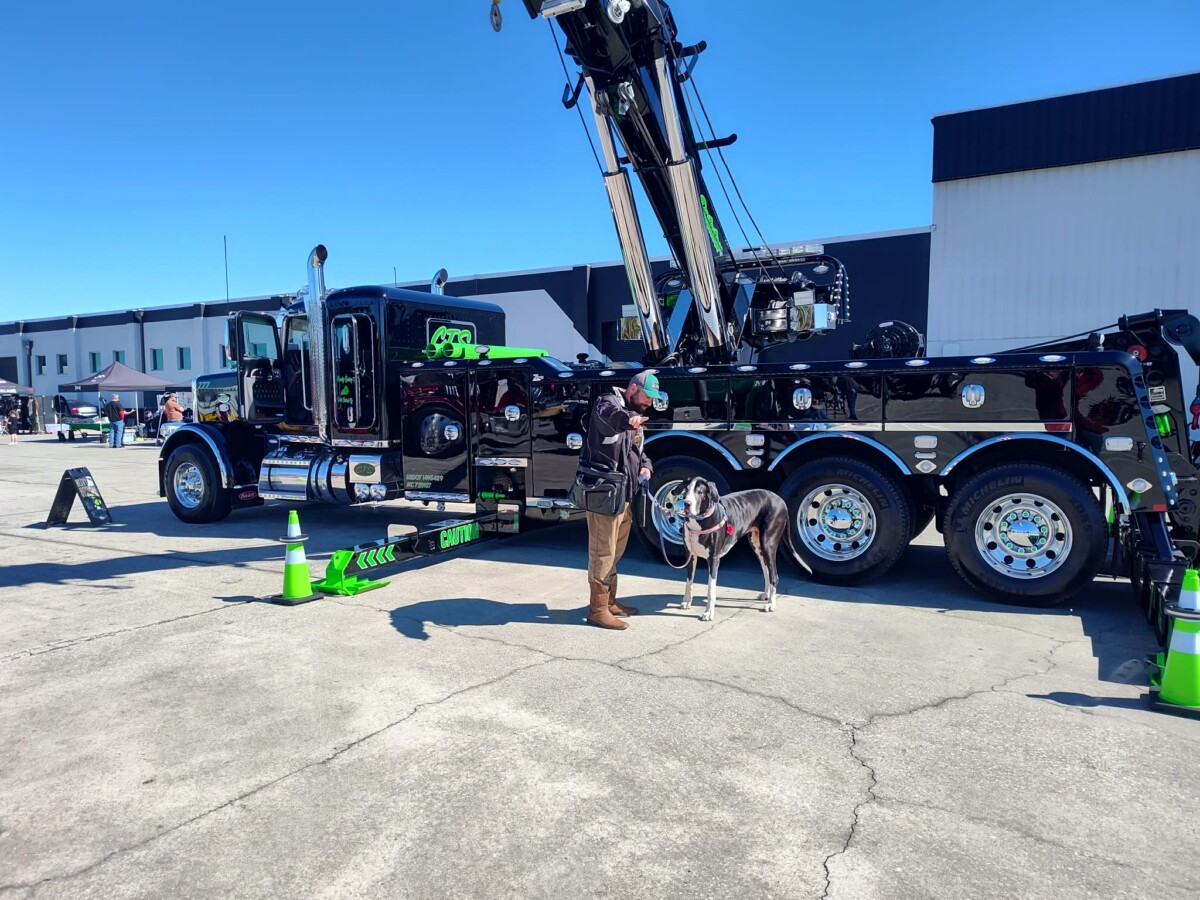
There are show trucks that sparkle under the lights—and then there are trucks that stand for something. Clifton’s wrecker, known on the CB as “Heavy Hook,” does both.
If you’ve spent time on the truck show circuit, you’ve seen it: the lights, the polish, and the towering American flag rising above the rotator. But what makes this truck unforgettable isn’t just its shine—it’s the man behind the wheel and the purpose that drives him.
Clifton doesn’t just attend truck shows. He shows up with intention.
When given the opportunity to focus strictly on competition and chase a passport toward a national championship, Clifton chose a different path. Instead of centering his efforts on trophies, he committed to standing with the American flag.
“It was a huge honor,” he said. “We have great respect for the flag, for our country, and for our veterans. Getting compliments for flying the flag means more than any trophy.”
He has driven 1,500 miles round trip just to ensure a show had a flag flying. In a $900,000 heavy rotator, that’s not a casual trip—it’s commitment. When organizers call and ask if he’ll bring the truck and the flag, he finds it hard to say no.
“There are a lot of truck shows that wouldn’t have the flag if we weren’t there,” he said. “We want to show support for our veterans and our country.”
That purpose runs deeper than chrome.
What surprises people most is that Heavy Hook isn’t trailered.
It works.
The truck responds to major highway accidents, overturned tractor-trailers, and complex recoveries along interstates between Louisville and Nashville. In nearby farming communities, it’s also called to recover stuck or overturned equipment.
When a loaded trailer rolls onto its side, the job doesn’t end with simply standing it back up. Cargo often must be unloaded by hand so it can be inspected and salvaged. Insurance companies work to recover as much product as possible, and that detailed process is why a highway recovery can take hours.
Motorists see flashing lights and wonder what’s taking so long. Clifton sees responsibility.
“It’s not hard to roll a truck back over,” he explained. “It’s everything else—the cargo, the fuel spills, the
cleanup—that takes time.”
Tow operators face one of the most dangerous jobs on the road.
“There’s a high percentage of tow truck drivers that get hit on the side of the road,” he said. “It’s
distracted drivers.”
At interstate speeds, two seconds is all it takes. He urges drivers to move over, slow down, and pay attention—for every responder working on the shoulder.
Then there’s the weather. Below-zero temperatures leave drivers freezing in stalled trucks, while summer heat turns cabs into ovens. Clifton and his team respond in all of it.
“If somebody calls and they’re broke down, it’s important to get there quickly,” he said. The public may see a gleaming show truck on the weekend. During the week, it’s a lifeline.
Maintaining a working truck at show-level condition takes discipline. Clifton is the only driver of Heavy Hook, and he’s meticulous. He avoids leaving fingerprints on the paint, won’t use brushes that could
scratch the finish, and after summer runs, he pulls the truck into the shop to “debug” it—cleaning every
inch.
“I’ll spend nights in the shop cleaning on it,” he said.
That level of care is why people struggle to believe it’s a working truck.
“I’m partial to working show trucks,” he said. “It’s easier to keep one nice if you don’t use it.”
But he uses it—and drives it to the shows. Rock chips and road grime are part of the deal. To him, there’s something honest about a truck that earns its shine.
“The trucker community is one of the best communities,” he said. “It’s just a big brotherhood.”
At truck shows, that brotherhood is easy to see—families walking the rows, veterans stopping to talk, drivers sharing stories. Clifton believes that if more of the public attended, they’d see trucking in a different light.
Behind every polished truck is sacrifice: time away from home, long nights, and missed holidays.
Clifton’s family stands beside him, traveling when they can and supporting the journey.
Heavy Hook turns heads even on the highway. Drivers pull alongside to record it. At truck stops, chatter rolls across the CB: “Nice looking hook.”
The name fits. In trucking slang, wreckers are called “hooks.” With a heavy rotator behind him, “Heavy Hook” stuck.
His schedule stays full—Louisville, 75 Chrome Shop, Biloxi, Bristol, Iowa 80, Liberty, Indianapolis, Tennessee, and more.
At Louisville, he’ll be parked outside.
And yes—the flag will be flying.
“If you go to a truck show for the trophy, you’ll probably be disappointed,” Clifton said. “If you go for the people and the atmosphere—that’s what it’s all about.”
Heavy Hook may be steel, hydraulics, and horsepower.
But what people truly see is pride—pride in country, pride in craft, and pride in community.