Maryland advances plan to remove and replace Chesapeake Bay Bridge with wider new bridge spans for $15 billion
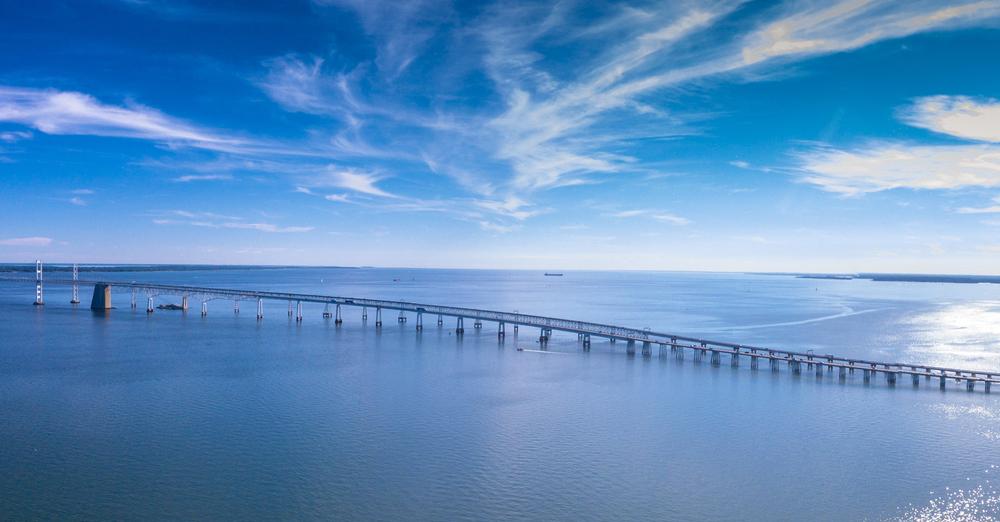
The Maryland Transportation Authority (MDTA) Board has approved a plan to remove and replace the existing Chesapeake Bay Bridge to provide drivers with a “smoother travel experience.”
On December 18, 2025, MDTA voted to approve a plan for the Chesapeake Bay Crossing which includes the construction of two new, four-lane bridge spans and removal of the existing Bay Bridge spans.
The MDTA-approved plan, dubbed “Alternative C,” includes the following measures:
- Two new four-lane bridge spans with full shoulders across the Chesapeake Bay, enhancing safety while providing additional transportation capacity, reliability and mobility;
- Removal of the existing Bay Bridge spans, addressing existing roadway deficiencies including narrow lanes and lack of shoulders, eliminating the need for major rehabilitation projects and associated lane closures and delays, and increasing navigational clearance to meet U.S. Coast Guard requirements. The navigational clearance will match that of the new Key Bridge, allowing larger ships to access the Port of Baltimore;
- Widening of US 50/301 to eight lanes (four per direction) from west of Oceanic Drive to east of Cox Creek to accommodate transitions to the new crossing;
- Financial commitments for transit-related improvements; and
- An optional bicycle and pedestrian shared-use path, which the MDTA will further evaluate to determine if it should be included.
Construction is expected to begin in summer 2032.
“This recommendation is an exciting step that moves us closer to a Bay crossing that provides a smoother travel experience for those who drive over the bridge and the Marylanders who live by it,” said Maryland Department of Transportation Acting Secretary Samantha J. Biddle in the lead-up to the vote. “Alternative C is the option that best supports Marylanders’ current and future daily travel needs with the least environmental impact on our treasured Chesapeake Bay.”
“Alternative C best fulfills the study’s purpose and need while considering environmental and financial responsibility,” said MDTA Executive Director Bruce Gartner. “Of the build alternatives, it is the most cost-effective, impacts the least amount of natural, socio-economic and cultural resources. It would enhance safety with full shoulders and wider lanes, bring between $17 to $23 billion into the local economy, and create 61,300 to 75,600 jobs with 76% direct employment of construction workers.”
The cost of the project is estimated at $15 to $17 billion, WBAL reports.