‘Talk about stress’ – Truckers sound off to FMCSA about parking problems ahead of survey
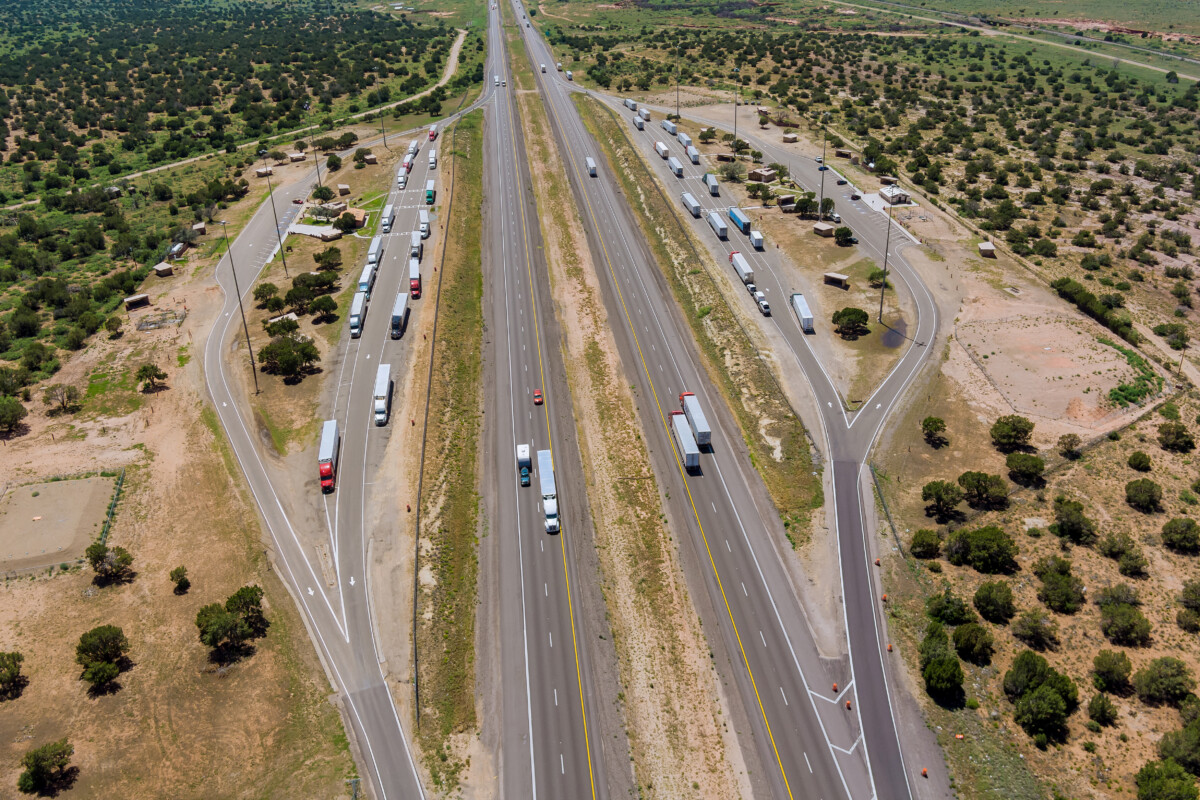
Truck drivers are telling federal transportation officials about the real-world problems they encounter with finding safe parking spaces ahead of a planned survey on the financial benefits of creating more truck parking availability.
This month, the Federal Motor Carrier Safety Administration (FMCSA) announced plans to move forward with a proposed information collection titled Quantifying the Benefits of Creating New Truck Parking Spaces.
The agency will survey thousands of truck drivers on their experiences finding truck parking in order to demonstrate the monetary benefits of increasing truck parking availability to state and local governments.
Several truck drivers have taken advantage of the open comment period on the proposed truck parking study to provide FMCSA with immediate feedback on the long-standing truck parking problem.
What Are Drivers Saying About Truck Parking Problems?
See below for some of the comments left by truck drivers on parking issues they’ve encountered and suggestions on how to address the problem.
- “One of the easiest way to increase truck parking is requiring industrial parks to have truck parking lanes, in both directions, throughout the entire industrial complex. Most drivers would prefer to go to the shipper or receiver in the evening, before their morning appointment. They can take their sleep break and be close for their loading or unloading in the morning. This also allows them to avoid rush hour traffic. Also, rest areas should be built using the layout of the new Kentucky and Indiana rest areas. They should have a minimum of 100 truck parking spaces. There is nothing more stressful than being tired and you’ve been searching for a place to park for an hour and a half. Please consider my suggestions. I’ve been a trucker since 1992. I’ve put a lot of thought into this problem. These are only 2 of my ideas that would be the easiest to manifest.”
- “Parking has always been a problem. Finding safe, clean, available parking has been a major issue for many years. As per usual, not a single agency has taken any noticeable steps to help this issue. They open rest areas and then soon close them down. This is a waste of tax payer time and money. The mandates for now having elogs makes parking an even larger issue. That clock runs out and you have no options open for stopping or parking. Something needs done and needs done very quickly.”
- “Truck parking. 30 yr driving OTR. Observation: rest areas closed and if reopened, much smaller. Truckstops: mom and pops were the best to park, eat a real meal and rest. Once the larger chains swooped in, crammed parking (many hoods fell off). Once elogs took a toll, paid parking swooped in making it even harder to do a 30 min break without being harassed by lot attendant to move for the paid trucker for that spot (as to park on fuel island for the 30 min). Truckers are forced to park by elog and forced to pay to park? Talk about stress.”
- “As a truck driver, I have seen a large increase in drivers parking on the streets, sides of highways, and entrance and exit ramps. I know many drivers claim that even if a truck stop has an available “legal spot,” it is usually a reserved spot, typically costing around $20 for most truck stops and travel centers. Most companies do not reimburse this expense for drivers, so for a lot of drivers that is a hard expense while doing their job each week of $140. Adding that weekly cost onto the already exorbitant prices for food, showers, and other basic items needed to survive makes it a hard decision to reserve that one spot knowing that money can be used elsewhere. Parking for us is extremely limited in Maryland, New Jersey, New York, Pennsylvania, Connecticut, North Carolina, Florida, Northern Illinois, and Indiana. Also, around metro areas such as; Dallas-Ft Worth, Houston, Atlanta, Los Angeles, Chicago, Portland, and Seattle, there is an extreme scarcity of legal parking for large trucks. Even if it is just a simple gravel parking lot with a porta-potty on site it would greatly help with increasing access to safe parking for all truck drivers in America.”
- “It seems to me that these private companies that are offering up paid parking is a start to the parking shortage. I know a lot of drivers complain about having to pay for parking but the way I look at it is it’s $20 well spent. Most of the time it’s quiet enough you can get a good nights sleep and not have to worry too much about theft or outside sources knocking on your door. if the states would quit closing down some of these rest areas it would help to relieve the problem. As it is now if you’re not in a parking lot by 9 o’clock at night, you’re not gonna get a parking space at a truckstop. I see a lot of trucks parked along off ramps, and on ramps. I’ve had to do it myself, but it’s not my choice for parking. Too many things could go wrong, like a car getting off an exit and for whatever reason hitting your truck. The cops coming along waking you up and either giving you a ticket and or telling you you have to move.”
- “As a truck driver with 16 years of experience, both as a company driver and an owner-operator, I’m submitting this comment along with a rough draft chapter from the book I’m currently writing. The truck parking shortage is severe, though it varies significantly by region. In many high-traffic corridors and metro areas, a commonly cited estimate is that there is only enough legal parking for roughly one in ten trucks on the road each night. This forces many drivers to shut down an hour early just to start searching for parking, which reduces productivity and increases freight costs across the board. There is a widespread assumption that truck stops are providing adequate parking for us, yet in reality they are not — and they are profiting from the shortage. Many large truck stops have converted free parking into paid reserved spots at $16 to $20 a night, while still not coming close to meeting the actual demand … Many state rest areas have been closed due to budget issues, removing hundreds of much-needed parking spots. At the same time, local municipalities and even major cities like New York have passed ordinances that ban truck parking. This includes banning trucks from parking at the very customer locations where we are scheduled to deliver or pick up the next morning. Drivers are being booted or towed from delivery locations simply for trying to be in position for an early load.”
The comment period ends on May 6, 2026.