Congress mandates FMCSA regulation change so English proficiency failure triggers out-of-service order for CDL drivers
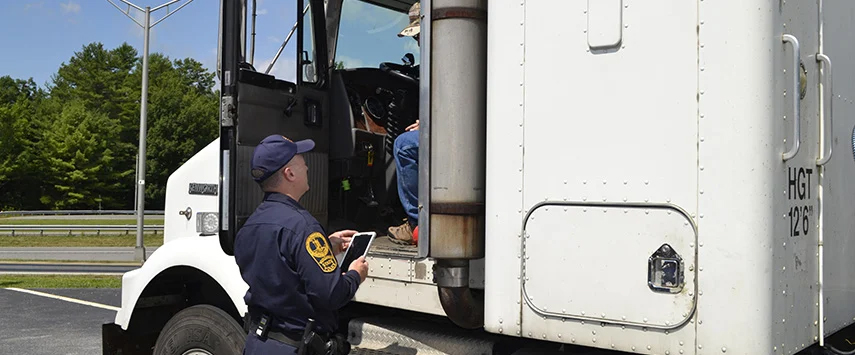
A federal appropriations bill passed by Congress this week contains a provision that tightens the regulatory screws for commercial driver’s license (CDL) drivers who fail to demonstrate proficiency in the English language.
On February 3, 2026, the U.S. House passed the Consolidated Appropriations Act of 2026, which included transportation funding elements.
This bill was signed into law by President Trump.
The bill contains a provision requiring the Federal Motor Carrier Safety Administration to update regulations to require that “non-compliance with section 391.11(b)(2) of title 49, Code of Federal Regulations, triggers an out-of-service order.”
Section 391.11(b)(2) of title 49 is a long-standing regulation that establishes that commercial vehicle drivers must be able to “read and speak the English language sufficiently to converse with the general public, to understand highway traffic signs and signals in the English language, to respond to official inquiries, and to make entries on reports and records.”
While this English language requirement has been a federal rule for decades, a 2016 FMCSA memo loosed enforcement when it directed law enforcement officers not to put commercial vehicle drivers out-of-service for language violations.
An April 2025 Executive Order issued by the White House called for increased enforcement of the existing rule requiring English Language Proficiency (ELP) for commercial truck drivers.
In response to the White House Executive Order, the Commercial Vehicle Safety Alliance (CVSA) added “English Proficiency” to the agency’s North American Standard Out-of-Service Criteria, effective June 25, 2025.
The Owner-Operator Independent Drivers Association (OOIDA), a prominent trucking trade group, spoke out in support of Congress for pushing for more stringent ELP enforcement.
“Nobody cares about road safety more than professional truck drivers. That’s why OOIDA and truckers across America strongly support Congress’ actions to sideline drivers who fail to demonstrate English proficiency. It’s common sense that truck drivers should demonstrate they can read critical road signs before getting behind the wheel of an 80,000 lb. vehicle on public roadways. In addition to reading road signs, professional truckers routinely communicate with law enforcement and first responders in order to do their jobs safely and effectively. OOIDA has long advocated for stronger driver training standards and we appreciate this legislative action to make our roads safer for our members and the motoring public,” said Todd Spencer, President of OOIDA.
The bill also maintains an existing exemption for commercial motor vehicles transporting livestock or insects from the electronic logging device requirements.